How the Belbin Test Can Transform Your Career and Your Team
Transform your team performance by leveraging the power of behavioral roles. The Belbin Team Roles framework is a mechanism for assessing nine distinct contributions, enabling organizations to intentionally construct highly efficient teams and helping individuals align their careers with their innate strengths.
CAREER DEVELOPMENTGLOBAL TEAMWORKPRODUCTIVITYGROWTH MINDSETJOB SEARCH
Aria Guzu
2/5/20257 min read
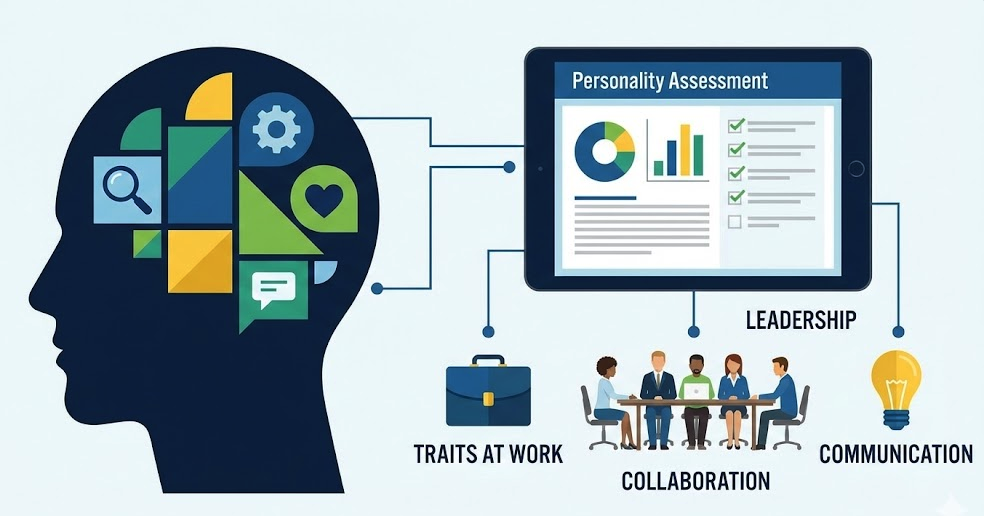
Whether you are charting a path for professional development or managing complex projects with diverse talent, understanding individual contributions beyond simple job titles is essential. The Belbin Team Roles framework offers a powerful lens through which to view human dynamics, helping individuals leverage their natural strengths and enabling managers to construct highly efficient teams.
1. What is the Belbin Test and How is it Used?
The Belbin Test is a mechanism for assessing team roles, typically presented as a Self Perception Inventory. It asks participants to evaluate sentences related to their behaviour in project situations and allocate a total of 10 points within each section based on which statements apply most strongly to them.
The inventory identifies nine types of contributions individuals typically make in a team setting. Eight of these are identified through the questionnaire, alongside the unlisted Specialist role. The roles are categorised by their characteristics, function, strengths, and "allowable weaknesses".
Use for an Individual
For an individual, the Belbin results clarify their innate tendencies, showing their primary and secondary preferred team roles. This self-knowledge should be incorporated into a tutoring action plan. For instance, someone scoring highly as a Plant might recognise their strength lies in generating new proposals and original suggestions, while a Team Worker understands their greatest asset is promoting team spirit and preventing interpersonal conflict.
Use for an Organization
For an organization, the test provides a framework for designing the project organization by ensuring the right people with the appropriate skills and authority are involved. By identifying the roles missing or over-represented in a group, organizations can intentionally assemble teams that cover all necessary functions for success, from strategic input to detailed follow-through.
Many companies implement psychometric and similar testing for the recruitment of new employees. In many cases, this will be rolled out during open days or during face-to-face interviews. I think there’s also an element of surprise and time-sensitivity that adds to the results. I have completed various personality tests interviewing over the years, and as much as sometimes they were intimidating, I now understand the value to the person and the company.
I think it’s also incredibly important to understand a few other things:
Knowing ourselves better can help to target more suitable roles and companies
Understanding these tests can guide us to be more proactive: we can identify if we need to grow towards a certain direction, according to our professional goals and/or companies we are interested in
These tests make you think about the “Ideal Candidate Persona”. If you know what Marketing Persona is, you will understand what I mean: we imagine the perfect candidate for the role in the company we want to work at, and think of the qualities, features, skills and knowledge they would have. Once we have that clear, we can reverse engineer and see how we could become that Ideal Candidate.
2. How to Leverage Belbin for Career Development
Leveraging the Belbin framework for career development means aligning your professional trajectory with your innate operational style, focusing on roles that provide continuous intellectual stimulation and encourage creativity.
Acknowledge Your Primary Contributions: Identify the roles where you score highest and seek out projects that capitalise on those strengths.
If your key role is the Monitor Evaluator, you are sober, unemotional, prudent, and excellent at analytical problem-solving and shrewd judgment. You should focus on strategic or planning posts where a small number of critical decisions carry major consequences.
If your key role is the Plant, you thrive in situations needing inventive solutions or when a project fails to progress. You should seek environments offering creative freedom and unusual approaches.
If you are a Completer-Finisher, your capacity lies in follow-through and attention to detail, ensuring work is completed and perfected. Your focus should be on roles where meticulous compliance and quality assurance are paramount.
This test is a valuable resource for continuous growth. It speaks volumes about your personality and work style. Recognising your weaknesses allows you to manage them proactively. For example, a Plant may be inclined to disregard practical details or protocol, while an Implementer might show resistance to unproven ideas. By being aware of this, you can seek a team environment that provides compensatory roles (e.g., partnering a Plant with an Implementer).
If you are an ambivert who works well with people but focuses deeply when left alone, and thrives in chaos due to a love of intellectual stimulation, you likely excel in roles that demand resilience, creative problem solving, and ambiguity management. This resilience, the ability to remain calm and focused under pressure, is crucial in crisis situations to minimise service disruptions.
There is no “good” or “bad” result. It’s all about recognising the strengths and weaknesses and thinking about how to be efficient and happy in our work, as well as how to perform better when working with others.
3. Leveraging Belbin in Team Management and Collaboration
The effectiveness of project execution and operational management depends heavily on understanding team composition. The Belbin framework moves beyond specific technical skills to categorise individuals based on their behavioural function within the group.
Knowing Yourself and Others
Effective team management requires understanding not just the professional capabilities of team members, but also the specific types or categories they fit into.
Co-ordinators are crucial in teams with diverse skills, excelling at consultation with control and identifying individual talents to pursue group goals.
Resource Investigators are extroverted and communicative, ideal for identifying and exploiting new opportunities, establishing external contacts, and searching for resources outside the group.
Shapers generate action, thrive on pressure, and are useful for sparking life into a team or pushing past political complications.
Recognising these inherent roles helps managers allocate tasks efficiently. For instance, processes such as capacity analysis or seeking continuous operational improvement often require the systematic analysis favoured by an Implementer, or the data-driven scrutiny of a Monitor Evaluator
I worked across large organisations where cross-functional projects were our business as usual. It was interesting to see how senior management would allocate people to specific teams - it was not solely based on our background, skills and experience. They would think about the duration of the project and how each of us liked to work, who did well under pressure and who was a perfectionist. Then they would create this Frankenstein of a team, who complemented each other not only through their professional profiles, but also as people and characters.
I think it’s a very important skill to develop. If you understand the dynamics of your people, you can anticipate how work will be done. I strongly believe - and have seen and experienced - that certain skills and knowledge can be easily gained, and people can exceed our expectations working on new projects or developing innovative solutions. But what is difficult to change is the personality, how we carry ourselves or how we interact with others. Team dynamics are as important as the professional capabilities we bring to the table.
Collaboration Across Roles
Successful collaboration hinges on managing the interplay between roles and making the best use of resources.
Stakeholder Mediation is a key task in project management, which aligns perfectly with the diplomatic and perceptive skills of a Team Worker. Managing relationships with key stakeholders is explicitly a function of the project management team.
When faced with detailed planning, a Completer-Finisher ensures an "eye for getting the details right", minimising slips and omissions.
For identifying risks and evaluating options, a Monitor Evaluator is invaluable for their capacity for shrewd judgment, ensuring options are weighed thoroughly before a decision is made.
Successful projects will always consist of teams with diverse skillsets and experiences. Some people are good under pressure, some are incredibly creative, others will be efficient mediators who support others and connect the dots, etc. No matter our skills and backgrounds, assuming we all have the minimum requirements needed to deliver a project, if we complement each other as individuals and “work personas”, we will find a way to be efficient and deliver.
4. Creating Happier and More Efficient Teams and Organisations
The strategic use of Belbin insights leads directly to better performance by matching roles to needs and fostering a supportive environment.
In the context of business, frequent changes or inconsistency in competitive strategy, or a firm being "stuck in the middle" by failing to commit to either cost leadership or differentiation, can be costly and inefficient. Similarly, an unbalanced team composition can lead to inefficiencies. Too many individuals of one type (e.g., Plants) can be counter-productive, leading them to engage in combat while reinforcing their own ideas.
Efficiency means aligning talent to achieve specific project objectives that are SMART (Specific, Measurable, Achievable, Relevant, Time Bound). Focus on Operational and People Alignment:
Systematic Work Flow: Operations should be executed systematically. For instance, when solving a bottleneck in a process (like site surveys constraining production), the solution requires identifying the constraint and dedicating resources to it, which mandates systematic analysis and clear action, typically driven by Implementers or Shapers.
Adaptive Capacity: Operations managers must handle capacity planning strategically. Using the Belbin roles allows managers to deploy resources effectively, aligning staff to the demand curve. For example, applying a demand chase approach for cleaning staff means having the flexibility to vary staff numbers as required to meet fluctuating demand, thereby achieving cost savings. A happy team understands why staffing levels fluctuate if the operational requirement (demand) is clear.
Morale and Spirit: The presence of a Team Worker has a "lubricating effect on teams". They promote team spirit and cooperation, which is vital because investing in employee training and motivation often leads to significantly reduced errors and better quality than expensive capital expenditure.
Strategic alignment of roles helps ensure that the project management effort across the lifecycle is properly achieved, drawing upon the skills and experience of many individuals to successfully deliver the required outcomes and benefits.
In essence, the Belbin framework acts like a strategic orchestra conductor. It ensures that every instrument (or team member) plays to their maximum ability, covering all necessary notes (functions) from the analytical planning performed by the Monitor Evaluator to the detailed execution driven by the Implementer, resulting in a cohesive and successful symphony (project outcome).
I invite you to explore yourself and your professional persona by setting some time aside and completing this test. Click here to download a simple worksheet (it’s free!). Once you’re done, take time to think about how these results can support your personal and professional development journey.