How Emerging Market Multinationals (EMNEs) Leverage the Springboard Strategy for Competitive Advantage
Why EMNEs Skip the Traditional Internationalization Funnel. The classical OLI framework doesn't always apply to today's fastest-growing firms. This analysis examines the Springboard Framework as an alternative model where international expansion is a process of resource acquisition, not exploitation. Discover how contextualising strategy, integrating economic and cultural dimensions (Hofstede, Porter's Diamond), drives success.
GLOBAL TEAMWORKAGILEMANAGING CHANGEMULTICULTURALISMGROWTH MINDSETINTERNATIONAL BUSINESS
Aria Guzu
9/25/20245 min read
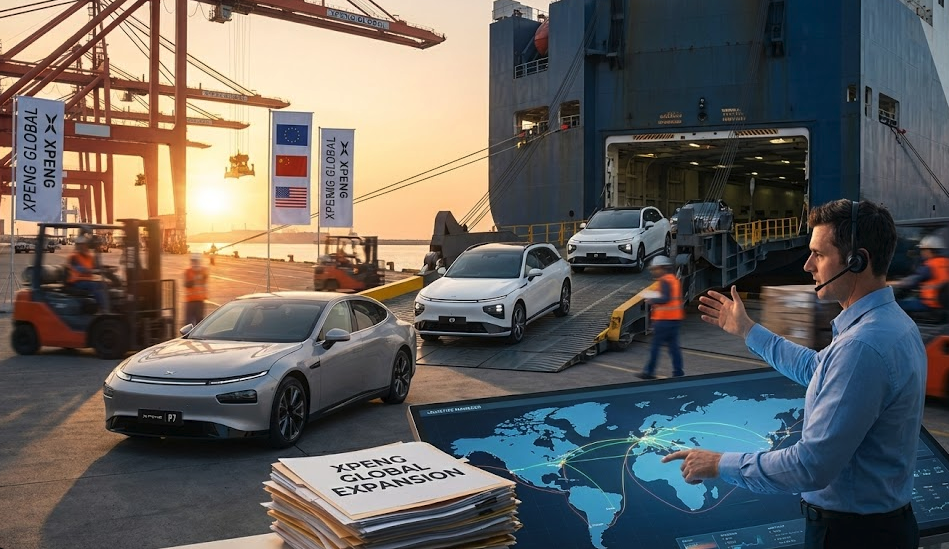
The integration of developing and transition economies into the global marketplace has fundamentally reshaped the landscape of international business, giving rise to powerful Emerging Market Multinational Enterprises (EMNEs). These firms often employ unconventional strategies to grow their global footprint and challenge established Western multinationals. This article examines the core value of the Springboard Framework as a theoretical lens for understanding the rapid internationalization of companies like the Chinese electrical vehicle (EV) manufacturer XPeng, focusing on how these firms acquire crucial strategic assets to strengthen competitiveness both abroad and in their home markets.
The Context of Emerging Market Internationalisation
Chinese manufacturers, in particular, have experienced decades of development compressed into a short period, leading to challenges related to their traditional reliance on Country Specific Advantages (CSAs), such as inexpensive labour. To ensure sustained competitiveness, these businesses must develop Firm Specific Advantages (FSAs), which include acquiring technology, gaining knowledge, and building brand equity. While classical internationalisation theory, such as Dunning’s OLI framework, posits that a firm must possess sufficient firm-specific advantages to offset the liabilities of foreignness before internationalising, this standard may not apply effectively to EMNEs.
Instead of internationalising to exploit existing advantages, EMNEs frequently use international expansion as a method to acquire competitive advantages. This shift highlights that while FSAs are relative concepts depending on market situation and competitors, firm capabilities are absolute and determine if a firm holds an advantage over other market players.
Insight into Background: My background in International Business Management, which included coursework on business internationalisation and managing socio-cultural challenges in high-value contracts, such as partnerships with Tsinghua University, gave me exposure to the nuances of differing decision-making structures and cross-cultural communication in the Asian market. This focused academic experience underscores the critical importance of understanding non-Western internationalisation models, such as the one discussed here.
The Springboard Framework: Acquisition of Strategic Assets
The Springboard Framework suggests that EMNEs utilise outward investments as a strategic springboard. The key objectives of this strategy are two-fold: to acquire strategic assets needed to efficiently compete with global players, and to battle institutional and market constraints within their home market.
Conditions and Outcomes: The success of this framework depends on conditions such as increasing global integration, the willingness of global players to share strategic resources, and government encouragement through financing or tax breaks. The resulting outcomes for EMNEs include:
Acquiring Competencies: Gaining global experience, improving technological and innovation capabilities, and acquiring managerial competence and professional expertise.
Overcoming Home Constraints: Exploiting institutional and structural gaps in the home market (e.g., weak judicial systems, poor legal protection for property rights), and securing preferential treatment from home governments through reverse investments. Reverse investments (where an EMNE subsidiary invests back into the home country) are often granted non-financial privileges, such as regulatory support, and financial privileges, such as tax breaks.
Brand Enhancement: Gaining a ‘globalised’ image and enhancing brand reputation, which can increase sales and allow for brand premium in the home market.
While classical theory suggests that firms deviating from profit objectives will fail, EMNEs often have sufficient financial resources to acquire technology and seek competitive advantages instead of focusing solely on profits. However, the unconventional nature of the springboard model carries risks, including low internal support and high risks due to low levels of global experience.
XPeng: A Case Study in Springboarding
XPeng Motors, founded in 2014, is a Chinese smart EV company that is highly reliant on extensive R&D and innovation, dedicating 43% of its employees to R&D efforts. As a relatively new manufacturer operating in one of the world's most competitive automotive markets, XPeng faces pressure from rapid economic growth that minimises cost advantages and necessitates the abandonment of labour-oriented strategies.
For XPeng, internationalisation offers the opportunity to improve operational know-how, acquire managerial capabilities, and gain access to proprietary assets, such as distribution channels and technology. Equilibrience took the liberty to explore potential internationalisation targets and possible pros and cons associated with internationalisation and springboarding.
Internationalisation Targets and Strategy:
1. Mexico: Exploiting Locational Advantages: Mexico is primarily attractive for its locational advantages, offering a strategic position for low-cost manufacturing and assembly. These location advantages include cheap labour, 46 Free Trade Agreements, and Western ports that facilitate exports to the US, Australia, and New Zealand. By leveraging these cost advantages, XPeng can cheaply manufacture or assemble vehicles and export them to developed markets, which in turn boosts the EMNE's image and enhances sales in the domestic Chinese market.
Although the local EV market in Mexico is young, with low demand and infrastructure challenges (e.g., inability of the electricity grid to fully charge EVs), the strategic value for efficiency-seeking and market-seeking FDI fully compensates for the lack of local engagement.
2. Russia: Accessing a Rapidly Growing Market: Russia’s automobile market is the fastest growing in Europe for EVs, supported by significant government investment (around $7.9 billion) into charging infrastructure and hydrogen fuel cell technologies. The government has created favourable conditions to encourage both FDI (through R&D funding and manufacturing incentives) and EV ownership (through zero tax rates, free parking, and subsidies up to 25%).
Internationalising to Russia provides XPeng with access to a high-demand market, cheap, skilled labour, and an abundance of supporting industries (automotive part suppliers). The country is raw-material-intensive and energy-driven, and while challenges exist due to the harsh climate conditions, the EV sector is not yet saturated, creating a promising market opportunity.
The Value of Contextualising International Strategy
An insightful understanding of international expansion requires going beyond pure economic theory to incorporate cultural and competitive contexts.
Cultural Dimensions: By applying Hofstede’s Cultural Dimensions, key differences and similarities between Russia and China become apparent, aiding in anticipating potential managerial challenges. Both countries exhibit high Power Distance (accepting inequality) and are collectivist in their focus, prioritising group interests over individual gain. Both also share a high Long-Term Orientation, indicating a pragmatic and adaptable approach geared toward a planned future. However, a significant distinction is Russia’s high Uncertainty Avoidance (95), where ambiguity is threatening, contrasting sharply with China's lower score (30), which suggests a higher tolerance for ambiguity.
National Competitiveness: Assessing the competitiveness of target countries using Porter’s Diamond Model, which focuses on factor endowments, demand conditions, related/supporting industries, and firm rivalry, provides a structured approach to location evaluation. This demonstrates that successful international strategy requires a multi-level approach, integrating the individual manager, the firm, the industry, and the macro-environment.
Throughout my professional roles, I often functioned as an internal business analyst or consultant, which involved market research, evaluating competitors, and analysing data to prepare strategies. This consistent exposure to data analysis, strategic planning, and risk mitigation, including successfully navigating logistical crises in international haulage, trained me to synthesise diverse data points (economic, cultural, and logistical) into cohesive strategies, mirroring the holistic evaluation required for MNE internationalisation strategies.
Learning from the Springboard
The XPeng case study offers a valuable lesson in modern international business: for rapidly developing EMNEs facing intense domestic competition, the traditional models of internationalisation based solely on exploiting pre-existing advantages are often insufficient.
The Springboard Framework defines an alternative, high-risk, high-reward approach where firms aggressively seek out Foreign Direct Investment (FDI) to acquire resources - managerial talent, technology, global brand recognition - that are then springboarded back home to boost domestic competitiveness.
For business leaders and strategists, the utility lies in recognising that internationalisation is not just about selling outwards, but often about strategically absorbing capabilities inwards. The success of an EMNE relies heavily on its ability to leverage locational advantages (like Mexico’s cheap assembly and trade agreements) and rapidly growing markets (like Russia’s EV sector) to facilitate this resource acquisition, demonstrating that global strategy must be adaptable, multidisciplinary, and deeply contextual.
The Springboard Strategy acts much like a specialised training camp for an emerging athlete: they venture out not because they are already world-class, but because they need to acquire the unique facilities, coaching, and exposure unavailable at home, specifically so they can return and dominate their domestic league.